
Category: Uncategorized

  • The Everyday Magic of NLP

    Abstract illustration about communication and connection

    There is no magic shortcut that changes a life overnight. But there can be something quietly powerful about learning to pause, choose better words and see a familiar situation from a fresh angle. That is the everyday magic many people experience when they practise NLP-inspired communication skills.

    The magic is in attention

    Attention changes a conversation. When you notice the assumptions hidden inside a sentence, you can replace a vague complaint with a useful question. When you listen for what someone values, you can respond to the person rather than only to the problem.

    Three small skills that feel surprisingly powerful

    1. Ask for clarity. “What would a good result look like?” is usually more useful than guessing what the other person means.
    2. Change
      the frame.
      A setback can be viewed as evidence of failure or as feedback about the next experiment. The facts may stay the same; the action available can change.
    3. Match your message to your outcome. Before a conversation, decide what you want to create: understanding, a decision, trust or a clear next step.

    Use influence ethically

    Communication skills should create more understanding, not pressure. NLP is sometimes misunderstood as a way to control others. A responsible approach is the opposite: be clear about your intention, respect boundaries and leave the other person free to choose.

    Make it practical this week

    Choose one recurring conversation. Before it begins, write one outcome you want, one question that could improve clarity and one sentence you could say more constructively. Afterward, notice what changed. Small experiments make new skills easier to carry into real life.

    Ready for guided practice? Explore current programs in the Hidden Hands course library.
  • How NLP Works—and What Research Says

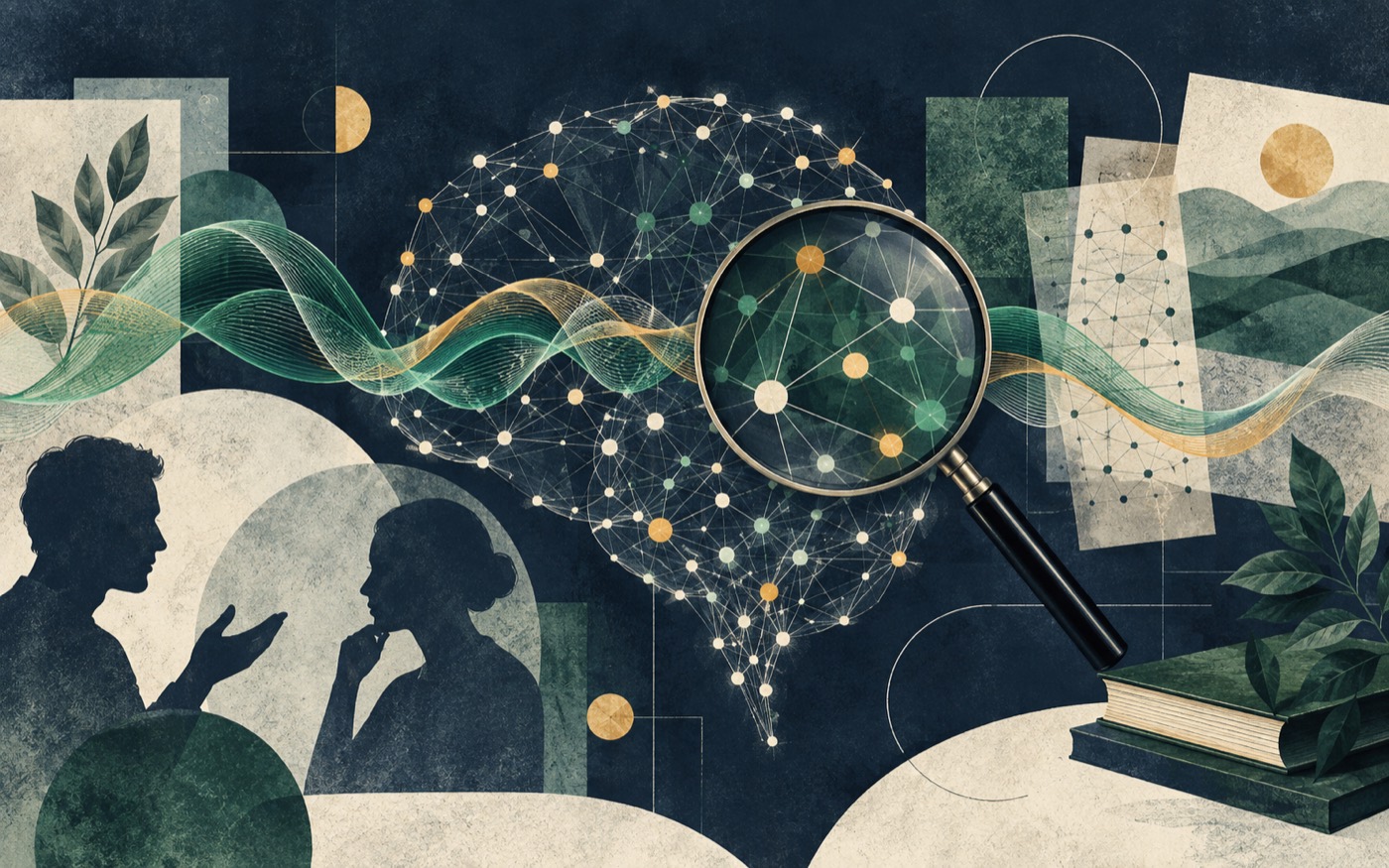
    Conceptual illustration about NLP, communication and research

    NLP is best understood as a set of models for observing patterns—especially patterns in language, attention, behaviour and learning. It asks people to notice how an experience is represented, what meaning is attached to it and what different response might be practised.

    How an NLP model works in practice

    A common NLP exercise begins with an outcome. Instead of saying “I do not want to be nervous,” a learner describes what they do want: perhaps speaking calmly, making eye contact and remembering the first three points of a presentation. The next step is to notice the current pattern: the words, images, body cues and assumptions that tend to appear before the presentation. From there, the learner rehearses a small alternative response.

    What research says

    Research on NLP is mixed and many of its broad claims have not been consistently supported by high-quality evidence. That is an important distinction. NLP should not

    be presented as a clinical treatment or a replacement for qualified medical or mental-health care.

    At the same time, several practices often taught alongside NLP—goal-setting, attention training, deliberate rehearsal, feedback and clear communication—have value as everyday learning skills. The most responsible approach is to treat NLP as a practical framework for reflection and communication, test techniques thoughtfully and keep expectations realistic.

    Questions to ask before using an NLP technique

    1. Is the goal specific and within my control?
    2. Does this exercise respect the other person’s autonomy?
    3. What observable change would tell me the practice is helping?
    4. Would professional support be more appropriate for this situation?

    A balanced way to learn

    Use NLP with curiosity, not certainty. Keep what improves clarity, confidence and communication in an ethical way. Let evidence, experience and the needs of the situation guide your choices.

    Explore practical training: visit the Hidden Hands course library for current NLP and mindset programs.

  • What Is NLP? A Practical Beginner’s Guide

    Abstract illustration of language, learning and thought patterns

    Neuro-Linguistic Programming (NLP) is a collection of models and practical communication tools that explores the relationship between the way we think, the language we use and the habits we repeat. It is often used in personal development, coaching and learning environments to help people notice unhelpful patterns and practise more useful responses.

    What does NLP stand for?

    The name points to three areas of attention: neuro refers to experience through the nervous system and senses; linguistic refers to the language we use with others and ourselves; and programming refers to learned patterns of behaviour. Together, these ideas invite a simple question: if a pattern was learned, can it also be observed, adjusted and practised differently?

    What NLP is useful for

    In everyday life, NLP can be a useful lens for communication, confidence and self-awareness. For example, it may help a learner listen more carefully to the words they choose before a presentation, become aware of the internal dialogue that appears before a difficult conversation, or rehearse a calmer response to a familiar trigger.

    These are skills of attention and practice. They do not replace mental-health care, medical a

    dvice or support from a qualified professional when that is needed.

    Three beginner-friendly ideas

    1. Notice the language of a problem. Statements such as “I always fail” can feel permanent. A more precise question—“What specifically has not worked yet?”—can open room for action.
    2. Separate an event from its meaning. Two people can experience the same event and interpret it differently. NLP encourages curiosity about the interpretation rather than treating the first story as the only story.
    3. Practise small changes repeatedly. A useful response becomes more familiar through rehearsal. A one-minute pause, a better question or a clearer outcome can be a practical place to start.

    Learning NLP responsibly

    Good NLP learning is practical, ethical and grounded in respect for the other person. It is not about controlling people or making unrealistic promises. It is about improving the clarity of your communication, understanding patterns and taking more intentional action.

    If you are new to NLP, begin with one everyday situation: a conversation you avoid, a habit you want to understand or an outcome you want to communicate more clearly. Observe the pattern first. Then practise one small change.

    Want structured guidance? Explore the NLP and mindset programs in the Hidden Hands course library.